The immigration of Korean people has been steady and substantial since the end of the Korean War. In fact, at the time of 1970 there were about 70,000 people in the United States with a Korean heritage. Since then the population has increased more than expected to be about 1.07 million people at the year 2000. When one factors in those who are part Korean/Asian, the statistic rises to about 1.23 million.
So where do the majority of the Korean Americans reside? Forty four percent of Koreans live in the West. This compares to twenty two percent of the general population. Nevetheless, the geography of where Koreans reside in the U.S. has changed in a big way since the 1960s. The most interesting statisic regarding the number of Korean Americans are those who reside in the South. The population of Koreans grew forty six percent between the years 1990 and 2000!

Even so, Koreans as a whole are still most noticeable in a few large city/urban centers. Southern California still leads the way in this regard. More than one quarter million Korean Americans live in the greater Los Angeles-Riverside-Orange County-San Bernardina-Ventura metropolis. The biggest population of Korean Americans is in New York City along with the surrounding northern New Jersey, southwest Connecticut, and eastern Pennsylvania regions. It is a fact that the strongest majority of all Korean Americans in the United States reside in these particular areas. However, Korean Americans can live where ever they choose nowadays without any hesitation. After all, this is what it means to be an American- to be free to choose your own destiny!
Best regards from the East,
Harlan Urwiler
For more information, feel free to visit my website at: http://www.myorientalgallery.com/.
Did you ever wonder how the Korean American community got started? If you are curious, these facts may be of interest to you. Korean American got their start when about seven thousand Koreans migrated (by encouragement) to the plantations of Hawaii. This happened mostly at the beginning of the 20th century, between 1903-1905 respectively. What then took place was that Chinese laborers were barred through immigration laws. So before the legal bars became closed, due to the National Origins Act, around 1,100 picture brides from Korea were allowed in to Hawaii.
These young Korean brides had a better education than many of their male partners. These ladies brought life and hope to the predominantly bachelor community. Many of them took part in Christian church life and even independence movements. These things had also helped to free their homeland from the colonial rule of Japan. Then students and and political exiles became a third major group of early Korean Americans.

Lastly, the American intervention in the Korean War (1950-1953) caused another great wave of Korean immigration. American soldiers who were stationed in Korea married Korean women. Some of them arranged the adoption of war orphans to other American homes. Some sponsored students to come back to the United States. Therefore, between 1951 and 1964 about 6,500 brides, 6,300 adopted children, and 6,000 students came to America. Plus, the number of Koreans who have immigrated to this country as adopted kids or brides of Americans since the Korean War is more than 100,000 for each group!
Best regards from the East,
Harlan Urwiler
For more information, please feel free to visit my website at: http://www.myorientalgallery.com/.
The current interest in contemporary Eastern decor throughout much of the Western world should not be overlooked. One of the most prolific of these influences is indeed the art and culture of China. It is no secret that China has had a profound interchange with a large part of East Asia and beyond. Its five thousand years of history certainly demonstrates the positive and negative events surrounding its historic influence. So there is a definite advantage to understanding the nature of Chinese art to begin the journey into Eastern decorating.

Most people don't realize that Chinese art got its start in America during the decade of the 1920s. When many Americans think of this time period, we conjure up these vague images about financial indulgence leading to the stock market crash of 1929. However, most of us were not alive during this time so we must rely on history book photos to give an impression. Nevertheless, the fact is that Chinese artwork went on display in several noteworthy museums during the "Roaring 1920s." So the culture and art of China (as well as other Asian artworks) is really nothing new for America today. Eastern culture has been alive and well in North America for quite some time!
Best regards from the East,
Harlan Urwiler
For more information, please feel free to visit my website at: http://www.myorientalgallery.com/.
Japanese Buddhism has been a distinctive force in the Empire of the Rising Sun. There is no debate that Buddhism was imported to Japan from China. Many elements of Japanese culture came from China. Confucius, for instance, has had a steady following in Japan for a very long time too. During the Nara period, Buddhism continued to prosper and it attracted a lot of devoted people. They mainly came from the upper classes of society. Of course, genuine religious motives were sometimes mixed with political ambitions. Even so, Buddhism became a powerful force to reckon with in the history of the Japanese people.

Today, religous options are open to Japanese people. Shinto is one faith that has survived along with Buddhism. In Japan Buddhism and other similar views became blended with the worship of Japan's emperor over time. So these facts make the Japanese experience with religion quite distinct from that of China. Buddhism remains a peaceful faith for millions of people throughout the world. In East Asia it has certainly left its mark!
Best regards from the East,
Harlan Urwiler
For more information, feel free to visit my website at: http://www.myorientalgallery.com/.
A very interesting fact is that Chinese art has been at home in America for almost a hundred years now. It all started with a Chinese man named C.T. Loo who began to introduce Eastern artwork to the American public back in 1915. It was not easy, because Chinese artwork had been regarded as something less than "art" before this. However, Mr. Loo did not give up.
Loo met another man named Charles Freer, who later opened an art gallery which is today very historically famous. It was called the Freer Gallery of Art. This is how Loo got the first Chinese artworks to be displayed in America. He sold them to Freer who put them on display. Today this may seem like something not too important. However, if you understand the difficulty that Chinese people have had for a long time gaining status in America it takes on great importance.
America is home to many different kinds of people and cultures. The fact that Chinese artwork is considered fine art today is no accident. In fact, Chinese art is very well known because of pioneers like C.T. Loo. He will be remembered as one of the world's greatest dealers of art from the Middle Kingdom. We take this opportunity to salute his valuable work!
Best regards from your friend,
Harlan Urwiler
For more information, feel free to visit my website at: http://www.myorientalgallery.com/.
I have to admit that of all the East Asian clothing for women I have seen the new style of Chinese "cheongsams" are truely one of the most beautiful wardrobes available on the market. Clothing for Chinese women has changed a lot in recent times, but the classic contribution makes the contemporary very attractive. The "qipao" is also known as cheongsam or "mandarin gown." It is a body-hugging dress for women who mostly live in China. However, the dress need not be confined to any cultural or national domain.

These lovely dresses originated from the Manchu legacy. They were later modernized and improved upon in the famous, commerce center of Shanghai. The English word loaned to apply to these dresses is "cheongsam." It comes from the Cantonese pronunciation of the original Shanghainese term. In the beginning, the term was used for clothing worn by either men or women. The Chinese word "qipao" refers specifically to clothing worn by women alone. It is interesting to note that "cheongsam" was the formal dress for Chinese men before Western style suits become popular in China. The actual cheongsam for men is not worn today, except during traditional celebrations or as party attire. The cheongsam dresses have since taken over the market in the area of women's clothing. It is certainly not hard to see why this has been the case!
Best regards from your friend,
Harlan Urwiler
For more information, feel free to visit my website at: http://www.myorientalgallery.com/.
One of Jung Chang's basic arguments is that the so-called "Cultural Revolution" of China was actually mis-named. Chang prefers to see the movement led by Mao as his own "Great Purge" of all real and/or potential threats to his political power. This is indeed a strong viewpoint, but one not surprising for Chang since she understands Mao to be a tyrant leader. The Great Purge, in Chang's estimation, became a series of political persecutions which nearly destroyed the spirit and culture of China itself. The true reason for it was the consolidation of Mao Ze Dong's absolute authority over the government party and the nation. So Chang lays the blame for the deaths of over 70 million Chinese people during peacetime squarely at Mao's own feet.
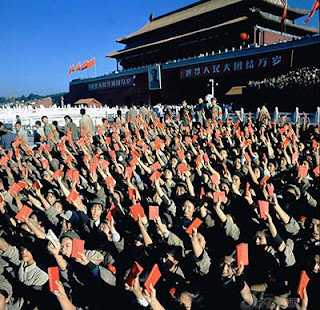
China during the 1960s was a recovering nation. After all, the Great Leap Forward of the late 1950s had cost millions of lives. It left the nation in shambles. However, by 1966 China was beginning to return to something resembling economic stability. This had not been witnessed in nearly a century. Granted, forty years later China would be considered the fastest growing economic power in the world. Even so, before the Chinese people would know this success they suffered through a period of political chaos and economic instability. The so-called "Cultural Revolution" was a mass movement instigated by Mao himself that intended to destroy old Chinese society. The goal was to raise up a new generation of Revolutionary minded young people. However, the revolution turned into a bloody series of fights among the Chinese people. It cost many, many lives in the process.... and damaged China's history forever. The main beneficiary was Mao himself, but at the expense of millions of Chinese people. The argument Chang presents is compelling given the facts of history now considered in retrospect.

Best regards from your friend,
Harlan Urwiler
For more information, feel free to visit my website at: http://www.myorientalgallery.com/.


